


 Deutsch
 English
 Español
 Français
 Nederlands
 Português


 Share
Share




China's 2026 Rare Earth Export Controls Reshape Global Supply Chains
In 2026, China's tightened export controls on rare earths, tungsten, and antimony are fundamentally redrawing global supply chains for defense, electric vehicle (EV) batteries, and renewable energy. With approximately 90% of global rare earth processing under Beijing's control and European licensing approvals falling below 25%, Western nations face a narrowing 12- to 18-month window to build alternative supply routes. This article analyzes China's strategy of reversible restrictions that maintain pricing power and extract geopolitical concessions, and evaluates the three strategic paths available to the West: managed dependence, costly independence, or a hybrid resilience model.
Background: The 2025-2026 Escalation
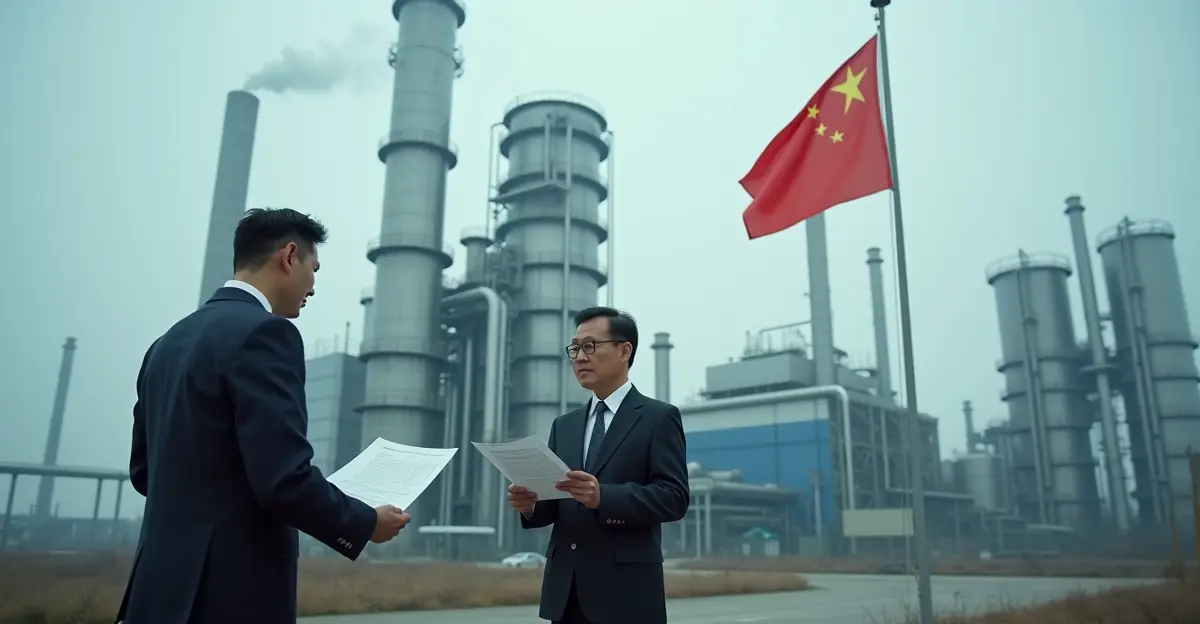
China's October 2025 export control expansion, formalized through MOFCOM Announcements Nos. 55-62, imposed sweeping restrictions on superhard materials, rare earth production equipment and ores, medium and heavy rare earths (including holmium, erbium, thulium, europium, and ytterbium), lithium batteries, artificial graphite anode materials, and rare earth items of foreign origin containing Chinese rare earths. The measures also covered rare earth-related technologies. In a tactical move, MOFCOM Announcement No. 70 of 2025, issued on November 7, 2025, temporarily suspended six of these announcements for one year until November 10, 2026. However, as analysts at Rare Earth Exchanges noted, this is not a genuine rollback: licensing requirements and bureaucratic delays from April 2025 rules remain in force, and only about half of roughly 2,000 EU export license applications had been approved by November 2025. The US-China trade war escalation that followed, including a 130% US tariff increase, has made 2026 a decisive year for critical mineral geopolitics.
China's Strategy: Weaponizing Control, Not Scarcity
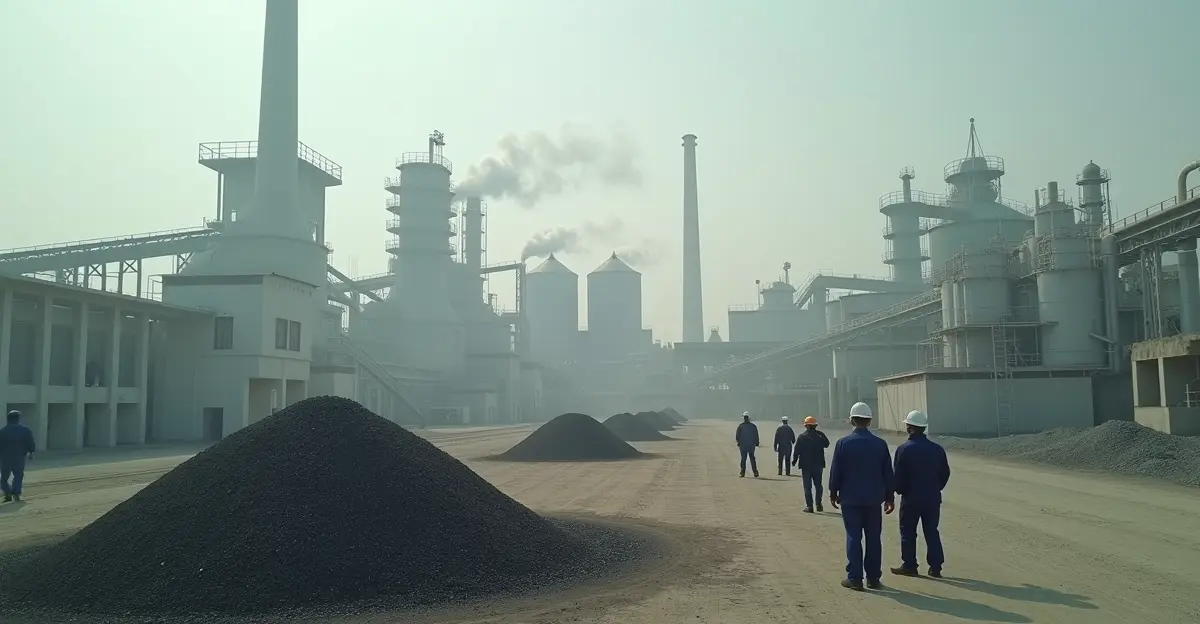
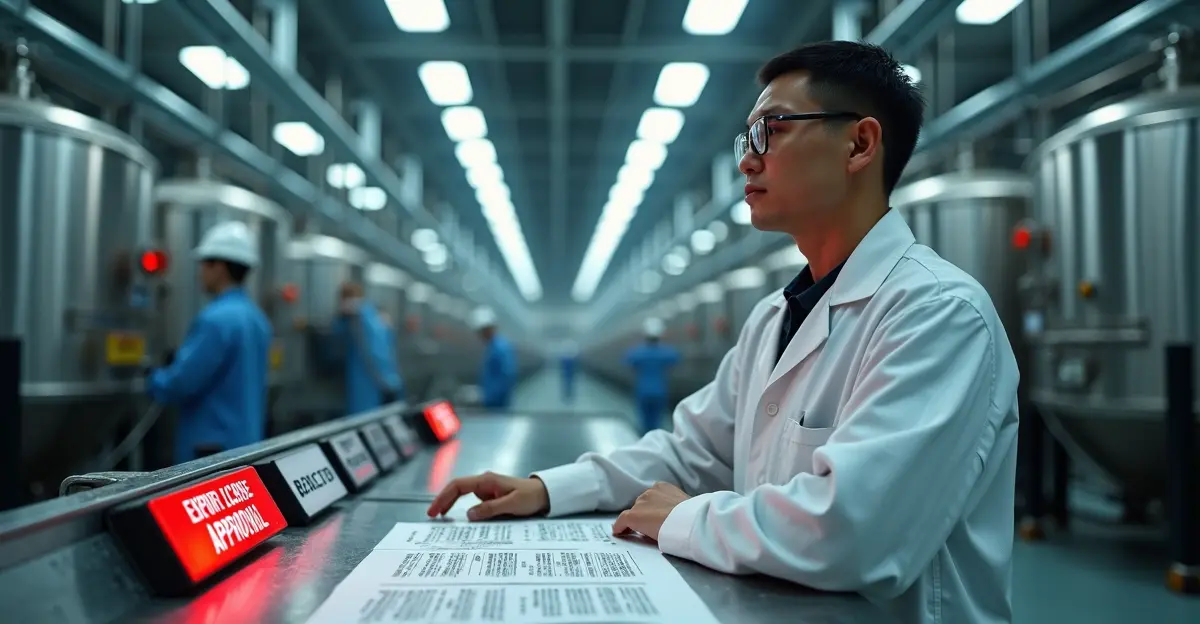
China's approach is not about cutting off supply entirely but about maintaining a reversible stranglehold. By controlling 90% of global rare earth processing, 80% of tungsten, and 60% of antimony, Beijing can adjust restrictions based on diplomatic objectives. The tiered permit framework through MOFCOM, with processing times of 30-60 days, allows conditional permits for civilian uses like semiconductor manufacturing while imposing complete bans on U.S. military applications. This asymmetric leverage means Western nations require 5-15 years to develop alternative sources, while China can quickly tighten or loosen the valve. The critical minerals supply chain vulnerability is further underscored by price spikes: outside China, rare earth prices surged up to sixfold in 2025-2026, with tungsten hitting record highs in April 2026 due to combined export curbs and rising military demand.
The Reversible Restriction Tactic
China's temporary suspension of select controls in November 2025 was widely misinterpreted as an easing. In reality, it is a strategic tool to prevent large-scale Western investment in alternative supply chains. By creating uncertainty, Beijing discourages the massive capital expenditure needed to build independent processing capacity—estimated to take 20-30 years and cost tens of billions of dollars. Over 80% of European companies remain dependent on Chinese supply chains for materials essential to defense, EVs, and renewable energy. The EU critical raw materials act aims to reduce this dependence but faces implementation hurdles.
Impact on Defense, EVs, and Renewable Energy
The controls have immediate and severe consequences across multiple sectors. Rare earths like dysprosium and terbium are critical for permanent magnets used in EV motors and wind turbine generators. Tungsten is essential for armor-piercing ammunition, jet engines, and semiconductor manufacturing. Antimony is used in flame retardants and automotive batteries. With licensing approval rates for European firms below 25% in some sectors, companies are scrambling for alternatives. The U.S. has responded with the FORGE initiative (Forum on Resource Geostrategic Engagement) and Project Vault—a $12 billion public-private partnership to establish a Strategic Critical Minerals Reserve. Additionally, the U.S. signed 21 bilateral critical minerals agreements in just five months through early 2026. However, these efforts may be too slow given the 12-18 month geopolitical window before China's dominance becomes irreversible.
Three Strategic Paths for the West
Analysts from the OECD, CSIS, and the European Parliament Research Service have outlined three strategic options for Western nations:
- Managed Dependence: Accept continued reliance on Chinese supply while building diplomatic safeguards and stockpiles. This is the lowest-cost path but leaves nations vulnerable to coercion.
- Costly Independence: Invest heavily in domestic mining, processing, and recycling to achieve full supply chain autonomy. This requires 20-30 years and an estimated $50-100 billion, but offers long-term security.
- Hybrid Resilience Model: Combine strategic stockpiles, diversified sourcing from allies (Australia, Canada, Brazil), recycling technologies, and material substitution (e.g., HREE-free magnet innovations like N45SH and N48SH grades). This balances cost and security but requires coordinated international action.
The global energy transition mineral demand makes the hybrid model increasingly attractive, as it can be implemented within the critical 12-18 month window.
Expert Perspectives
"China is weaponizing control, not scarcity," states a multi-institutional analysis cited by Rare Earth Exchanges. "By using temporary, reversible restrictions, Beijing maintains pricing power and extracts strategic concessions while preventing large-scale Western alternative investment." The analysis warns that rebuilding independent processing capacity could take 20-30 years—far exceeding the current geopolitical window. Meanwhile, the Michigan Journal of Economics notes that China's market concentration has prompted global efforts to diversify, but progress remains slow.
FAQ
What are China's 2026 rare earth export controls?
China's 2026 export controls are a set of restrictions on rare earths, tungsten, antimony, and related materials, initially expanded in October 2025 (MOFCOM Nos. 55-62) and partially suspended in November 2025 (No. 70) until November 2026. However, licensing requirements from April 2025 remain active, maintaining China's leverage over global supply chains.
Why is China controlling rare earth exports?
China aims to maintain pricing power, extract geopolitical concessions, and prevent Western nations from building independent supply chains. By controlling 90% of global rare earth processing, Beijing can adjust restrictions based on diplomatic objectives, using reversible controls to discourage alternative investment.
How does this affect the US and Europe?
Western nations face severe supply risks for defense systems (tungsten for armor-piercing ammunition), EV batteries (rare earth magnets), and renewable energy (wind turbines). European licensing approval rates have fallen below 25%, and price spikes of up to sixfold have occurred. The US has launched FORGE and Project Vault, but rebuilding capacity could take 20-30 years.
What are the alternatives to Chinese rare earths?
Alternatives include domestic mining in Australia, Canada, and the US; recycling of rare earths from e-waste; material substitution (e.g., HREE-free magnets); and stockpiling. The hybrid resilience model combines these approaches to reduce dependence within 12-18 months.
Will China's suspension of controls last?
The suspension under MOFCOM No. 70 is temporary until November 2026. Analysts view it as a tactical pause, not a policy reversal. China can reinstate full controls at any time, maintaining its strategic leverage over critical mineral supply chains.
Conclusion: The Clock Is Ticking
China's 2026 rare earth export controls represent a decisive moment for global critical mineral geopolitics. With a narrowing 12- to 18-month window for action, Western nations must choose between managed dependence, costly independence, or a hybrid resilience model. The 2026 critical minerals policy outlook will determine whether the West can break free from China's stranglehold or faces prolonged vulnerability in defense, energy, and technology sectors.



Follow Discussion